

Stand firm or bend?
Stand Firm or Bend?
TotalEnergies has just abandoned its offshore wind projects in the United States. In return, the US administration will reimburse the group $928 million, which the company will reallocate to shale oil and gas projects.
The once-pimply geeks of Silicon Valley who wanted to change the world have built empires. And in order to preserve them, they now seem to be abandoning their ideals. Amazon, Meta and many others have contributed to Donald Trump’s inaugural fund. Bill Gates openly supports him. They all rush to attend his invitations.
And everywhere, more subtle shifts are taking place. Until 2023, Lego explicitly promoted its “Diversity & Inclusion” agenda. A few days after the US administration began its anti-diversity crusade targeting suppliers active in the United States, this direct promotion was replaced by a focus on well-being at work.
The signal is powerful: when political winds shift, grand speeches about responsibility give way to more immediate trade-offs. For each of us, cynicism becomes an almost natural temptation. Behind the great narratives of economic, social and environmental responsibility, the only lasting truth of business, it seems, remains profit.
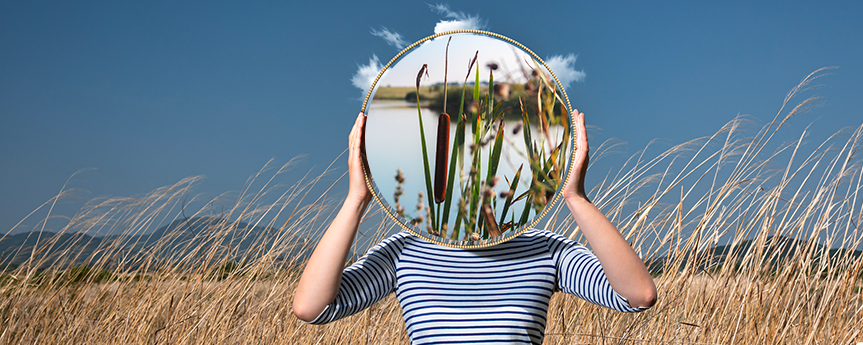
Another reading is necessary. It takes us back to La Fontaine, and to the fable of The Oak and the Reed. In it, the reed reminds the oak: “I bend, and do not break.” The line is famous. And since the storm uproots the oak, it is often interpreted as a praise of flexibility over rigidity. It is a call for agility and adaptation as a condition for survival. That is true, but incomplete. The reed does not survive by drifting aimlessly. It holds because of a dense network of roots that stabilizes the riverbanks and the soil. It is precisely these underground systems that allow it to resist, remain anchored, and bend without being swept away.
This may be the most important lesson for our time. Bending does not mean abandoning one’s roots. Adapting does not mean dissolving. Engaging with an unstable, violent or absurd environment should never mean giving up what, within us, forms our foundation. Without anchoring, flexibility itself becomes a form of fragility.
The case of Sandoz is interesting. Reuters reported in 2025 that Keren Haruvi, President of Sandoz North America, was meeting almost weekly with White House officials to discuss pharmaceutical imports, America’s dependence on foreign production, and security of supply. This is not a spectacular gesture, but a constant interaction with a turbulent environment.
The same logic can be found in recent statements by Gilbert Ghostine, Chairman of the Board of Directors of Sandoz. During his intervention at the Talent Synergizer of the University of Geneva EMBA in March 2026, he stated: “Focus on what you can control. Choose the field of possibilities: the decision to transform volatility into opportunities for growth.” In other words: engage with reality, yes; lose your axis, no.
At the individual level, this is where self-leadership begins. Not as a posture of heroic self-mastery. Not as a withdrawal from the world. But as a process of inner clarification, followed by dialogue with the environment from that place of clarity. What within me must not be sacrificed at the first reversal of context? What is essential? What can I adapt, and what am I unwilling to sell, even discreetly, even in the name of realism?
In a world where systems themselves sometimes seem to adjust at the expense of any humanistic logic, this work becomes decisive. It is not about playing the proud oak that believes itself invincible, nor about becoming a rootless reed, tossed around by every current. It is about knowing how to adapt from a solid base.
This, fundamentally, is what makes self-leadership more necessary today than ever. What we believe about ourselves is deeply influenced by our environment. A large part of our norms comes from outside us. When these norms collapse, not losing ourselves requires returning to what is essential to us. And it is real work to sort through all of this and rediscover our own essence.
For some, this may seem illusory in the face of the world’s brutality. Others will be tempted by two extremes: cynicism or withdrawal. Yet neither is enough. To withdraw entirely from the world is to give up acting within it. To surrender completely to its power struggles is to risk losing oneself in them.
Self-leadership offers another path: a way of inhabiting uncertainty without betraying oneself. It helps us return to our fundamentals, not in order to close ourselves off, but to interact with reality from a clear centre. It enables us to distinguish the accessory from the essential, tactical adjustment from deep renunciation, fruitful adaptation from inner capitulation.
And perhaps this is the main challenge today. In a world that sometimes seems to have lost its mind, keeping our feet on the ground is not a conservative reflex. It is a condition for continuing to contribute. For not becoming a stranger to ourselves. For still being able to do something that makes sense to us, and perhaps also to others.
The reed bends, but it holds. Not because it yields to everything, but because it is rooted. This is exactly what self-leadership makes possible: building within ourselves that zone of anchoring from which we can face the winds, evolve with them, engage with the world, without abandoning what is essential.


